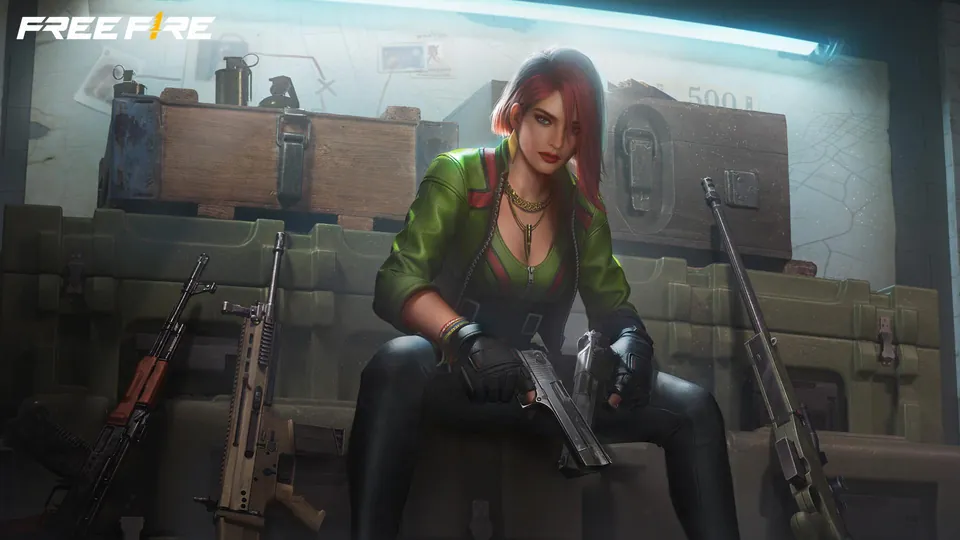
Looting should prepare you for the next decision. It becomes a problem when you keep collecting items without knowing what your kit still needs. In Free Fire, a clear stopping point can be more useful than a backpack filled with options you will not use.
Garena's OB55 notes split devices into active and passive categories. Check current equipment slots instead of assuming older limits.
Start with a functional kit
Your first goal is the ability to respond to nearby danger and move toward the next position. Look for a usable weapon, appropriate ammunition, available protection and recovery supplies. Then consider the equipment that fits your intended route.
This order is flexible. If an opponent is approaching, immediately usable equipment matters more than a perfect combination. If you are already well equipped but far from your destination, leaving may be more valuable than searching another room.
The landing and first-circle guide explains how to define that departure point before the opening becomes a long shopping trip.
Give every carried item a purpose
When you are safely behind cover, look for ammunition that no longer matches your weapons, duplicate options without a planned use, or items you do not understand. Keep what supports your actual kit and reconsider what you are carrying only because you found it.
Avoid universal ammunition counts. A suitable amount depends on your weapons, how you use them and your opportunities to resupply. Instead, notice repeated outcomes. If you frequently run dry, review both what you carry and how you spend it. If one supply type repeatedly crowds out something essential, adjust that balance.
Use the weapon loadout guide to keep those choices tied to the distances you intend to play.
Make each loot stop answer one question
Before approaching a building or loot box, name the missing item category. Perhaps you need recovery supplies or ammunition for your chosen weapon. Once that need is met, leave unless a new reason justifies staying.
Check the surrounding angles before opening an inventory view. A defeated opponent's supplies may still sit in an area watched by someone else. Winning an exchange does not make its location private.
Try this brief sequence:
- Observe the approach and select an exit.
- Identify the specific item category you need.
- Take or swap what serves that need.
- Return attention to the play area and move on.
Coordinate supplies without a long pause
In a squad, share a short need or offer while remaining aware of nearby threats. Be specific enough that a teammate can act: the ammunition type, a recovery item or a needed equipment category.
Do not make everyone stand together while comparing entire inventories. Choose a protected moment and keep a player watching the approach where practical. The squad communication checklist helps make supply calls brief.
Review excess looting as a route problem
After a match, note the last optional search before an uncomfortable rotation or surprise encounter. Ask whether the item you hoped to find would have changed your next decision. If the answer is no, that search was a candidate to skip.
For the next few matches, use a smaller checklist and observe what you actually miss. Add items back because you identified a practical need. A useful inventory is one you can explain quickly and access without losing track of the match.